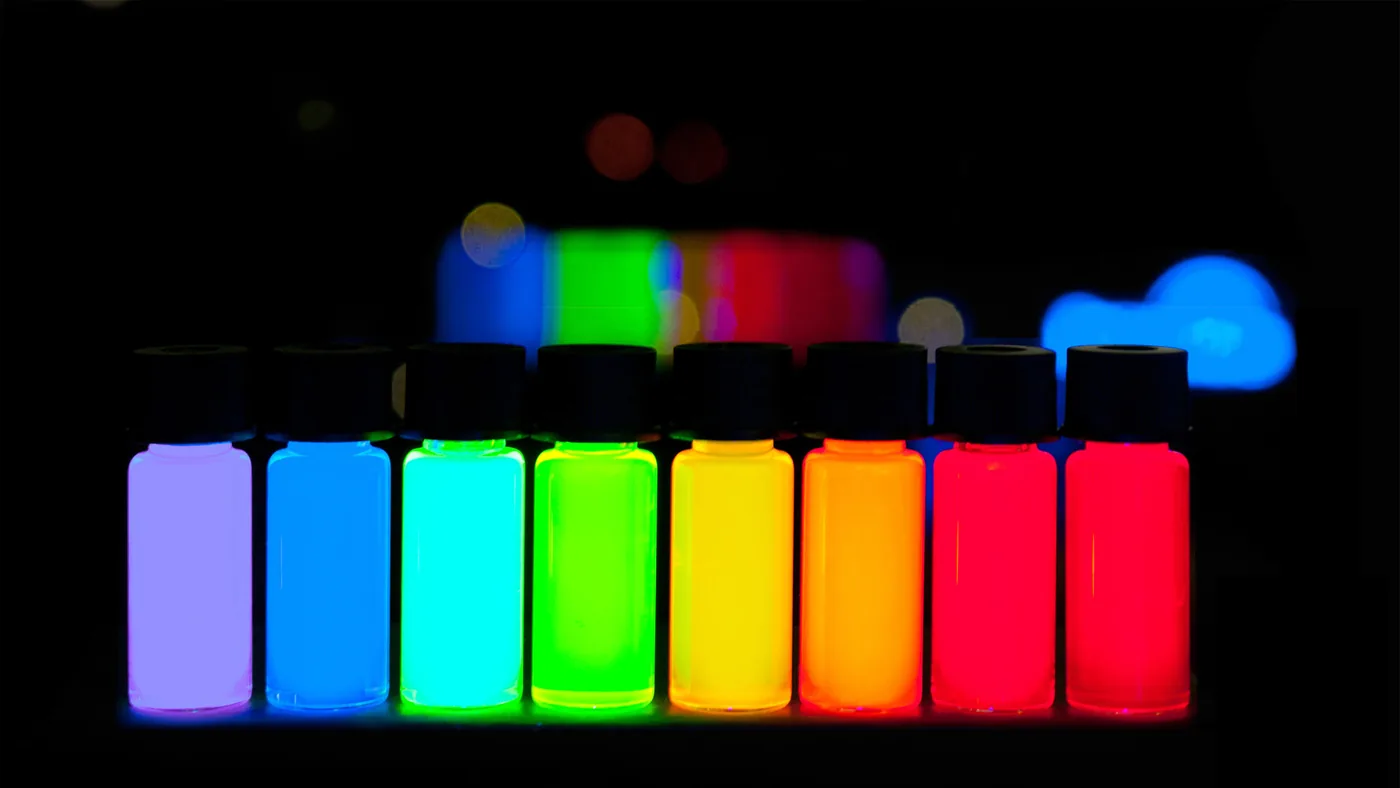

Quantum dots are super tiny semiconductor particles, usually only a few nanometres across, that emit different wavelengths of light depending on their size. The smaller the dot, the shorter the wavelength it emits. This allows manufacturers to tune them to emit specific colours in a narrow band of wavelength. This further makes them really useful for displays, where converting light into these pure, saturated colours can appreciably improve colour gamut coverage.
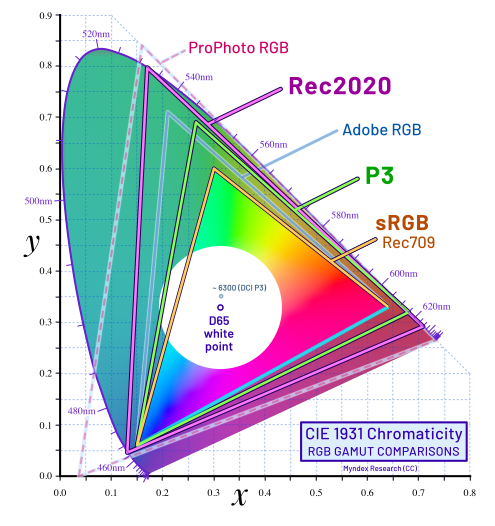

You’ve probably heard of quantum dots through QD-OLED, where Samsung Display uses blue OLED emitters and a quantum dot conversion layer to produce red and green light. However, they’ve also been used in LCDs for years, including many QLED televisions and MiniLED monitors. In these displays, quantum dots usually convert some of the blue backlight into red and green, producing a wider colour gamut.
There’s also QDEL, or Quantum Dot Electroluminescence, which is an experimental display technology where electrically driven quantum dots emit light directly. The idea is that this could eventually become a really cool panel technology that’s self emissive and doesn’t rely on organic materials, but efficiency and blue QD longevity are pretty iffy right now.
So, in conclusion, quantum dots are used in several different display technologies, and their presence alone doesn’t guarantee good image quality. How they’re implemented matters way more than whatever the marketing says.